

14 May 2026
STCP transported approximately 72 million passengers and will end 2025 with a positive net result
In a context of high operational demands and structural transformation in the mobility sector, the company ended the year with a positive net result of approximately 2.9 million euros, demonstrating solid, responsible and future-oriented financial management.
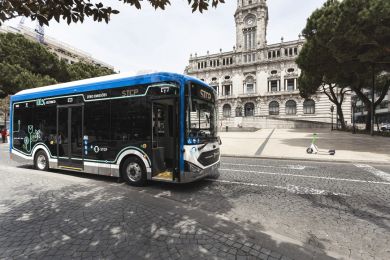
In a context of high operational demands and structural transformation in the mobility sector, the company ended the year with a positive net result of approximately 2.9 million euros, demonstrating solid, responsible and future-oriented financial management.
The year 2025 is also marked by the start of a new long-term strategic cycle, with the beginning of a new 10-year contractual period, namely the Public Service Contract for Road Passenger Transport, the Public Service Contract for Electric Car Passenger Transport in the Municipality of Porto, and the Program Contract for the Electric Car Museum.
More service, closer proximity, and greater passenger confidence.
In 2025, STCP transported 71.8 million passengers (71.2 million by bus and 625,000 by electric car), registering sustained growth of 0.3% compared to the previous year, a sign of increased passenger confidence in public transport.
This performance was accompanied by an increase in transport services, with a total of 21.7 million kilometers traveled (+1.4%), ensuring a more robust, comprehensive and tailored response to mobility needs in the six municipalities where the company operates: Porto, Vila Nova de Gaia, Matosinhos, Maia, Gondomar and Valongo.
Despite the operational constraints caused by multiple interventions on public roads, STCP recorded an improvement in its main performance indicators, with commercial speed increasing by 4%, reaching 15.8 km/h, and the service compliance rate growing by 2.6 percentage points compared to 2024, reflecting a more efficient operation, greater regularity and better fleet flow.
Regarding average daily demand, STCP transported approximately 239,000 passengers on weekdays, 122,000 on Saturdays, and 83,900 on Sundays on its daytime network. On the overnight network, an average of 1,700 passengers were transported per day, highlighting the service's importance during periods of lower mobility availability.
STCP ended the year with an average workforce of 1,414 employees, reinforcing its operational capacity and the quality of service provided to the municipalities of the Porto Metropolitan Area.
Sustainability and Energy Transition
The energy transition and decarbonization remained strategic priorities for STCP in 2025, reinforcing the company's commitment to more sustainable and environmentally responsible urban mobility.
At the end of the year, the STCP fleet consisted of 444 buses and seven historic electric cars, with 75% of the buses powered by natural gas, 15% by electricity and only 10% by diesel, reflecting a consistent commitment to reducing the carbon footprint and progressively renewing the fleet.
The decarbonization strategy foresees the total elimination of diesel-powered vehicles by 2028, consolidating the company's transition to an increasingly clean, efficient, and sustainable operation.
Economic Results and Investments
Despite increased operating expenses, driven by rising fuel prices and salary updates, the company achieved a positive recurring EBITDA of €12.7 million, including financial compensation related to contractually stipulated public service obligations, demonstrating the soundness of the company's operational and financial model.
Transport revenue grew by 1.5% compared to the previous year, reaching 53.2 million euros, an evolution accompanied by the continuation of incentive programs for the use of public transport, namely the program for senior citizens, Circula PT, the Youth under 23 program, Incentiva+TP and the Veterans program.
The total investment of 14.6 million euros made in 2025 reinforced the ongoing commitment to modernizing operations, improving the passenger experience, and enhancing the working conditions of staff, notably through the acquisition of 20 standard electric buses and the refurbishment of the Francos Depot.
STCP thus reinforces its position as a strategic intermunicipal company for mobility in the Porto Metropolitan Area, ensuring a local, efficient and sustainable public service in economic, social and environmental terms, with permanent operation, 24 hours a day, 365 days a year.
The shareholder structure is composed of the municipalities of Porto (53.69%), Vila Nova de Gaia (12.04%), Matosinhos (11.98%), Maia (9.61%), Gondomar (7.28%) and Valongo (5.40%).
More service, closer proximity, and greater passenger confidence.
In 2025, STCP transported 71.8 million passengers (71.2 million by bus and 625,000 by electric car), registering sustained growth of 0.3% compared to the previous year, a sign of increased passenger confidence in public transport.
This performance was accompanied by an increase in transport services, with a total of 21.7 million kilometers traveled (+1.4%), ensuring a more robust, comprehensive and tailored response to mobility needs in the six municipalities where the company operates: Porto, Vila Nova de Gaia, Matosinhos, Maia, Gondomar and Valongo.
Despite the operational constraints caused by multiple interventions on public roads, STCP recorded an improvement in its main performance indicators, with commercial speed increasing by 4%, reaching 15.8 km/h, and the service compliance rate growing by 2.6 percentage points compared to 2024, reflecting a more efficient operation, greater regularity and better fleet flow.
Regarding average daily demand, STCP transported approximately 239,000 passengers on weekdays, 122,000 on Saturdays, and 83,900 on Sundays on its daytime network. On the overnight network, an average of 1,700 passengers were transported per day, highlighting the service's importance during periods of lower mobility availability.
STCP ended the year with an average workforce of 1,414 employees, reinforcing its operational capacity and the quality of service provided to the municipalities of the Porto Metropolitan Area.
Sustainability and Energy Transition
The energy transition and decarbonization remained strategic priorities for STCP in 2025, reinforcing the company's commitment to more sustainable and environmentally responsible urban mobility.
At the end of the year, the STCP fleet consisted of 444 buses and seven historic electric cars, with 75% of the buses powered by natural gas, 15% by electricity and only 10% by diesel, reflecting a consistent commitment to reducing the carbon footprint and progressively renewing the fleet.
The decarbonization strategy foresees the total elimination of diesel-powered vehicles by 2028, consolidating the company's transition to an increasingly clean, efficient, and sustainable operation.
Economic Results and Investments
Despite increased operating expenses, driven by rising fuel prices and salary updates, the company achieved a positive recurring EBITDA of €12.7 million, including financial compensation related to contractually stipulated public service obligations, demonstrating the soundness of the company's operational and financial model.
Transport revenue grew by 1.5% compared to the previous year, reaching 53.2 million euros, an evolution accompanied by the continuation of incentive programs for the use of public transport, namely the program for senior citizens, Circula PT, the Youth under 23 program, Incentiva+TP and the Veterans program.
The total investment of 14.6 million euros made in 2025 reinforced the ongoing commitment to modernizing operations, improving the passenger experience, and enhancing the working conditions of staff, notably through the acquisition of 20 standard electric buses and the refurbishment of the Francos Depot.
STCP thus reinforces its position as a strategic intermunicipal company for mobility in the Porto Metropolitan Area, ensuring a local, efficient and sustainable public service in economic, social and environmental terms, with permanent operation, 24 hours a day, 365 days a year.
The shareholder structure is composed of the municipalities of Porto (53.69%), Vila Nova de Gaia (12.04%), Matosinhos (11.98%), Maia (9.61%), Gondomar (7.28%) and Valongo (5.40%).
